

What is POTS?
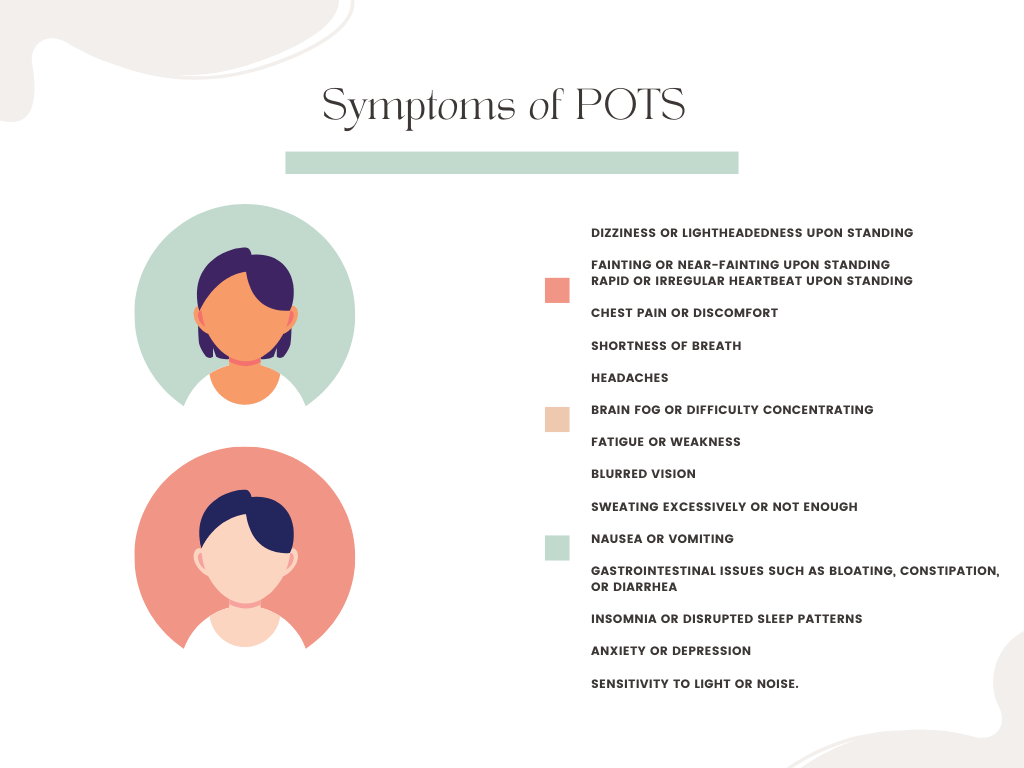
POTS, or Postural Orthostatic Tachycardia Syndrome, is a type of dysautonomia that affects the body’s autonomic nervous system. This condition is characterized by a sudden increase in heart rate and a drop in blood pressure when a person stands up from a sitting or lying down position. POTS can cause a range of symptoms, including dizziness, lightheadedness, blurred vision, palpitations, shortness of breath, chest pain, and fatigue.
Many people with POTS also experience gastrointestinal issues, such as nausea, bloating, and constipation. Sleep disturbances, such as insomnia and frequent nightmares, are also common in individuals with POTS. In addition, POTS can affect a person’s cognitive function, causing difficulties with memory, concentration, and processing information.
The severity of POTS symptoms can vary from person to person, and they can be debilitating and interfere with daily activities. Activities such as standing, walking, or even showering can trigger symptoms, leading to a reduced quality of life for those affected.
Unfortunately, POTS is a complex and often misunderstood condition, and it can be challenging to diagnose and manage. However, with proper treatment and lifestyle adjustments, many people with POTS can find relief from their symptoms and improve their quality of life.
How it all began
I began experiencing symptoms of POTS at a young age, but they were not as severe as they are today. Initially, I dealt with mild dizziness and tunnel vision when transitioning from sitting to standing. Despite knowing that many people faced similar symptoms, mine were more intense than what others had described.
When the COVID-19 pandemic began in early 2020, my symptoms worsened significantly. I experienced severe vertigo and my heart rate spiked upon standing, leaving me gasping for air. Unaware of POTS at the time, describing my symptoms to my doctor proved challenging. I struggled to articulate the debilitating impact of my symptoms, finding it difficult to convey the right words.
Searching for a diagnosis
After two years of searching for answers, I was diagnosed with POTS at the end of 2022. During this time, I had seen several specialists and undergone numerous tests to rule out other conditions. One of the biggest hurdles was the shortness of breath I experienced, even with minimal exertion. I was referred to a respirologist to investigate potential causes, such as asthma or pneumonia, but my breathing tests indicated my asthma was under control. This left me with even more questions and stress as I continued to search for answers.
I was then referred to a cardiologist who conducted an ECG and ultrasound of my heart, but again, the results were inconclusive. Despite months of blood tests, x-rays, and echocardiograms, my symptoms persisted, and no clear answer emerged.
During a routine checkup, my blood pressure dropped, and my heart rate spiked when I stood up, leading my doctor to consider POTS for the first time. It was a condition I had never heard of before, and I spent weeks researching and connecting my symptoms to this diagnosis. Finally, after years of uncertainty, I had an explanation for my condition. My doctor and I began recording my blood pressure and heart rate while exploring different treatments to manage my POTS symptoms.
Treating POTS
The initial treatment prescribed for POTS is increasing fluid and sodium intake. My doctor instructed me to consume between 8-12 grams of sodium every day, which proved difficult to achieve solely through eating salty foods. Eventually, I had to resort to taking sodium tablets to reach the required amount. Despite months of adhering to this regimen, my symptoms persisted. The next approach was to use a compression garment to promote blood flow back to the heart. However, after weeks of wearing the binder, I still experienced no relief.
My doctor then recommended beta blockers, a class of medication commonly used to treat POTS. These medications work by blocking the action of certain hormones that can cause an increase in heart rate and blood pressure, leading to improvements in symptoms such as palpitations, dizziness, and fatigue. Unfortunately, even after being on beta blockers for over a month, my heart rate spiked to the highest levels since we began monitoring my stats. My resting heart rate measured 170 BPM, and when I stood up, it surged to 140 BPM.
Now, I am on a higher dosage of beta blockers, and also trying an increased sodium intake once again. We are hopeful that this new combination of treatments will bring some relief before having to consider more drastic measures.
Living with POTS
As someone living with POTS, my day-to-day life is often a challenge. Every morning, I wake up with a sense of dread, wondering how severe my symptoms will be that day. Dizziness, lightheadedness, and fatigue are a constant presence in my life, making even the simplest tasks, such as standing up or walking, a struggle.
My work life has been significantly impacted by my POTS symptoms. Sitting at a desk for extended periods often causes discomfort and stiffness, while standing for too long leads to fatigue and dizziness. I’ve had to make significant adjustments to my work routine, such as taking frequent breaks, and modifying my workload, to ensure that I can function at my best.
My personal life has also been affected by POTS. I can no longer enjoy social events or activities that involve standing or walking for extended periods. Traveling and vacations are particularly challenging as changes in altitude or temperature can trigger my symptoms. Even simple activities, such as grocery shopping or running errands, require careful planning and pacing to avoid overwhelming my body.
Living with POTS has taught me to be patient and understanding with myself. I’ve had to learn to prioritize self-care and make adjustments to my lifestyle to manage my symptoms effectively. While living with POTS is a daily struggle, I’ve also learned to appreciate the small victories and celebrate the progress I’ve made. With the right support and management strategies, I know that I can live a full and meaningful life despite my POTS diagnosis.
 Chronically Thriving
Leave a comment